The phrase “venom allergy” conjures an image of a venomous rattlesnake biting a lone cowboy in the West. While a rattlesnake bite is dangerous, it’s not usually what we’re referring to when we say venom allergy. Instead, we’re generally talking about stings from flying insects or fire ants.
Common Venom Allergy Culprits
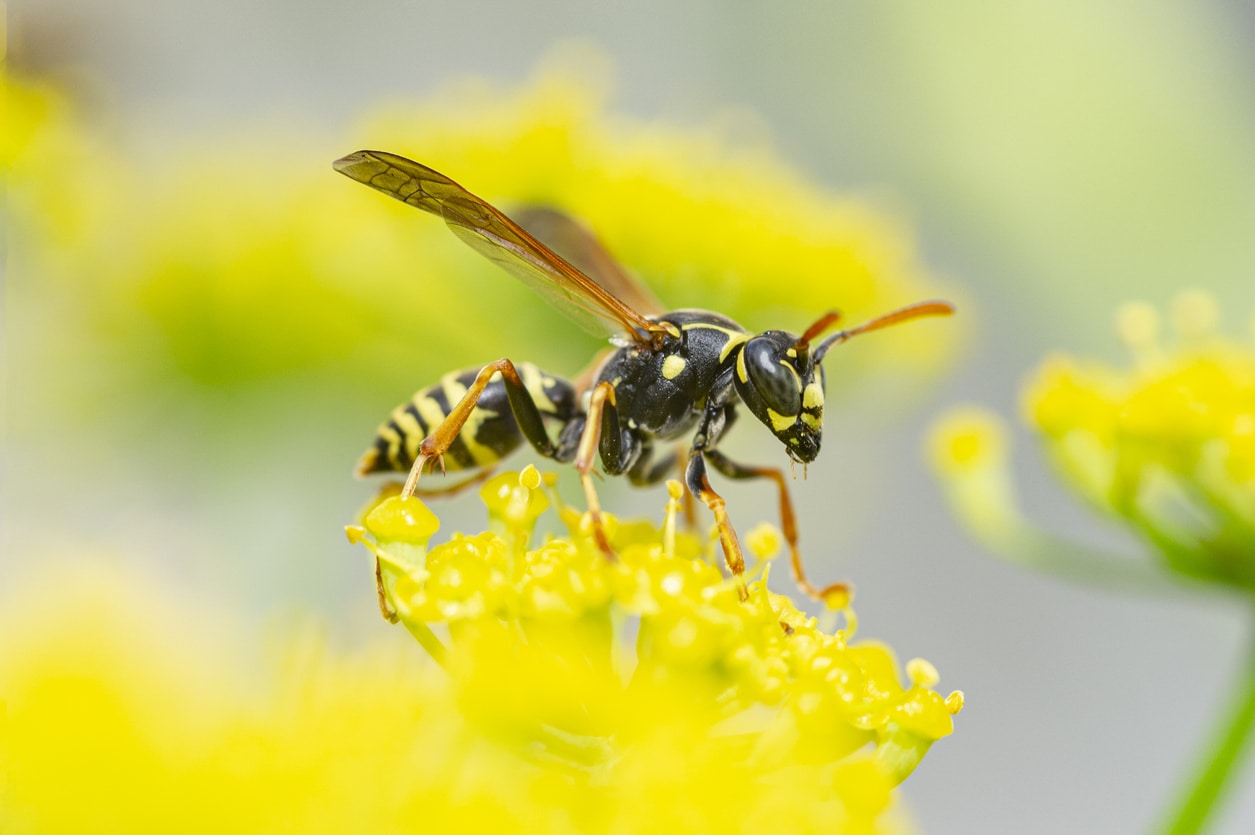
A few insects that can trigger a venom allergy include:
- Yellow jackets. Yellow jackets are in the wasp family. They’re black and yellow and build their nests in walls, logs, underground and other shaded areas.
- Paper wasps. Paper wasps are longer than bees and hang their legs behind them when flying. They’re usually reddish-brown to black, with yellow rings. They tend to build their nests in trees or on buildings and can often be found hovering around garbage cans in public spaces like Buckner Park.
- Hornets. Hornets are about the size of a bumblebee. They’re black with yellow or white stripes and a narrow waist. They may build nests on the roof overhang or in trees.
- Bees. Honeybees, bumblebees and Africanized honeybees are three bees that can cause a reaction. You might find them floating over flowers or building nests in holes in the ground or walls.
- Fire ants. Fire ants are red, reddish-brown or black and are generally the same size or slightly smaller than regular ants. Like regular ants, they live in large dome-shaped mounds on the ground. Their mounds don’t have a hold at the top like regular ants.
A venom allergy can cause pain, redness, itching, hives and swelling at the sting site. In some cases, the symptoms can spread to entire limbs, leading to secondary infections or even anaphylaxis. Symptoms of anaphylaxis are life-threatening and may include:
- Swelling of the tongue and throat
- Wheezing or difficulty breathing
- A sudden drop in blood pressure
- Feeling faint
- Cramps, nausea, vomiting or diarrhea
- Inability to swallow
Because a stinging insect allergy can cause severe or life-threatening symptoms, limiting your risk of a reaction is crucial. One way to accomplish that is by starting immunotherapy.
Managing Venom Allergies With Immunotherapy
Immunotherapy is a long-term allergy treatment that slowly decreases your sensitivity to a substance. Over the course of three to five years, your allergist will inject you with increasing doses of stinging insect venom diluted with saline. The amount of venom in the shot starts very small so that we can measure your reaction to it. Over time, we’ll increase the amount of venom to help your body build up a tolerance. The shot process takes place in two phases:
- The build-up phase. The build-up phase lasts about three to six months. You’ll need to get shots one to three times a week.
- The maintenance phase. The maintenance phase lasts about three to five years. You’ll need to get maintenance shots about once a month.
You may experience mild symptoms during immunotherapy, but they should lessen over time. If your venom allergy is severe, your allergist may also prescribe you an EpiPen in case you get stung and develop anaphylaxis.
For more information on identifying and managing venom allergies, contact Ear, Nose and Throat Associates today.